






















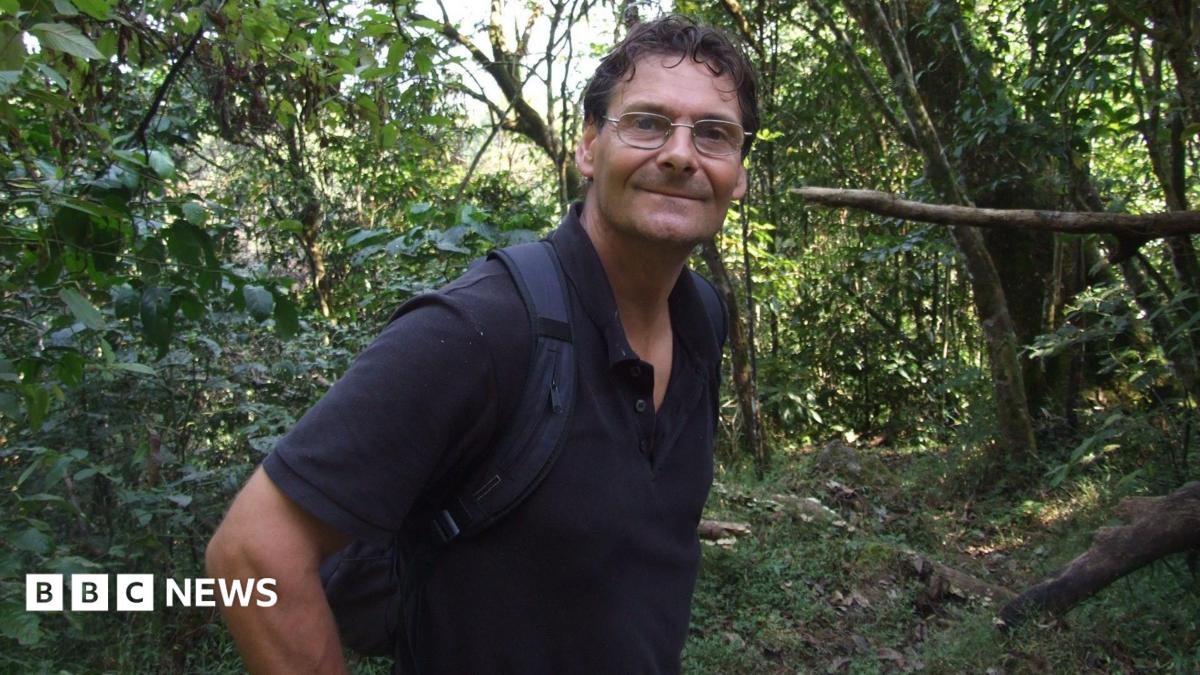

“It was pouring down with rain most days. Everything was wet, there was mould in my boots and I was feeling a little bit miserable,” recalls Prof Jon Lovett.
“Then this shaft of sunlight came through the forest canopy and there was a patch of sun where one of these mycotrophs was growing. I thought, ‘this is a new species’.”
In 1997, Lovett was living out of a tent in the forests of Tanzania during the rainy season to conduct an environmental survey of the area when he spotted the plant.
The mycotroph, a type of plant that feeds on fungi, was officially confirmed as a new and critically endangered species in June, almost 30 years after its discovery.
Dubbed ‘Afrothismia lovettii’ after Lovett, this is now the eighth plant species to be named after him, due to his botanical research in eastern Tanzania since 1979.
Now based in Swaledale and a faculty member at the University of Leeds, Lovett lived in the tropical forest for work, including a two-year stint in the 1980s.
Although he had a guide and there was a village to pick up supplies from, Morogoro, the nearest city was “several hundred kilometres away”, by his estimation.
His closest neighbours would often be the wildlife that called the forest home, including elephants and buffalo.
“You were always surrounded by large animals,” he explains.
“You couldn’t see them because the forest vegetation is quite thick but you could hear them moving around.”