

















After inspecting dozens of Corvettes (man, those ‘63 Sting Rays!) lining Roseburg’s sunbaked downtown for graffiti weekend in the southern Oregon city, the main squeeze and I head for a wine bar when her parents call in a panic from Down Under, where they live.
“Are you watching?” they shriek.
“Watching what?” she asks.
“Turn on your TV! They shot Trump!”

Maybe I should Google coverage from Aussie feeds because the initial American headlines are vague: popping noises have been heard and the Orange One has blood on his face. But our window-table booking starts in a couple minutes, so I pocket my phone as we walk.
It’s news to our ever-cheerful hosts at the straightforwardly-named Wine Destination that something’s happened to Donald Trump, but they say they’re not surprised by an attack on him. Nor are other patrons; a few now quietly scroll their devices while the graffiti parade readies outside.
Along the sidewalk, people cluster and mutter, but nobody I see looks startled. Mind you, word around these parts for months now has been that Trump’s days are numbered—that the liberals and the establishment are gonna kill him—but you hear a lot of things.
Nevertheless, the main squeeze and I are very much in the market for righteous shock, so we settle the bill and cross the street to a bar with a line of TVs. The shooting plays on a couple of screens, but the sound is set to a commercial country music channel. No one but us is watching.
“Can you at least put the captions on?” the main squeeze asks a barman.
“Ah, no, sorry, ma’am,” he says, wiping the benchtop and moving on.
Hunkering forward on my stool, I tune out the country bilge to focus on the news footage, which loops.
Trump’s ear-clutching plummet is odd to see, at first almost slapstick being silent and out of context, but the more the sequence repeats the more I am drawn to the moment ahead. “This,” I say, leaning over the bar for as big and clear a view as possible as Trump gets back up, blood-streaked from a gunshot, and snarls in fury with fist raised.
What an animal. What a fucking beast. And at 78 years old.
Emily Dickinson flashes to mind. A line: “Dare you see a soul at the White Heat?”

I’m a registered Independent who finds infinitely more things to bitch about than people to vote for, but the election is decided right here and now—I know it. The sureness is set in my teeth; my clenched hands. Dare I see a soul at the White Heat? Like holy fucking fuck I do: yes. Play it again. And again. It’s everything wrong and everything right. “One more,” I tell the barman.
As for the opposing sides’ policy differences—the border; macroeconomics; war with Russia; states’ rights; judges, and numerous irreconcilable interpretations of freedom and control—all that jazz drops to a low hum.
Policy and the interminable political blatherfest are drowned out by the bio-mythological potency of a stunned and wounded man getting to his feet with blood streaking his face, and roaring.
The question for years to come is not, “Where were you when Trump got shot?”
It is: “Where were you when Trump got up?”

I’m no fan of Raging Bull, Martin Scorcese’s black and white biopic of boxer Jake LaMotta, brute and masochist both, but there’s something about that late scene when LaMotta (as played by Robert De Niro), face pulped by ‘Sugar’ Ray Robinson, staggers across the ring after the final bell to taunt: “Hey Ray, you never got me down. You never got me down, Ray.”
This bloody ideal of American manhood as scarred and scarring but unconquerable, invincible (and, to our well-strapped redneck brethren un-motherfucking-governable)—as forever undefeated, and unvictimhooded, in spirit if not on points or paper—this gruesome ideal was incarnated on a field outside Butler, PA.
Later on and in the days since, calls and messages stream in from Aussie friends and family convinced that the U.S. is lit to pop and nobody’s gonna stop. Should you really be raising your kid there, they lump me with, with the constant gun massacres and extreme fascism and the looming apocalypse? How can you be so irresponsible? You should pack your kid up and get back to Australia at once, they say—where it’s safe.
Mate—I tell them—mate: before I tell youse to get fucked maybe remember that I grew up in Straya. I’ve done my time in that control-craving, authority-brownnosing, conformity-inclined, over-regulated, under-stimulated, quasi-coma ward of a country with no Bill of Rights or death penalty. There is so much more to life than minimizing risk, I say. So enjoy your penal colony turned mining pit while I surf the American apocalypse.

What the anxiety-addled Antipodeans simply cannot grasp about America’s communal madness is its wellness component. Aussies, like so many citizens of nations cursed by numbing stability, are blind to how thoroughly invigorating it can be to live inside an electrifying inseparability of reality and theater; to be an atom undergoing a roiling, thermonuclear fusion of the actual and the symbolic.
And what would really blow their un-American minds is that, despite America’s not undeserved reputation for rampant materialism, none of this is about money.
I’m very un-fatly paid here in southern Oregon—bringing in considerably less than when I was a university lecturer in Sydney, and of course banking absolutely nothing compared to what Trump, Biden, and the talking facefarts of Washington rake in. But a different, irrational, even nonsensical, yet potent vein of riches is open wide: America’s mad trip makes me a cast member of life’s mad drama and that is priceless.
So when Trump gets up and roars, I get up and roar.
More images come to mind: the heydays of Mike Tyson, when it was clear that boxing was not a sport at all. As the stakes, the menace, the severity of danger faced in the arena, prompted Joyce Carol Oates to write of boxing: “there is nothing fundamentally playful about it … At its moments of greatest intensity it seems to contain so complete and powerful an image of life—life’s beauty, vulnerability, despair, incalculable and often self-destructive courage—that boxing is life, and hardly a mere game.”
This is America’s communal madness, anachronistic and incomprehensible to most other developed nations. For all its Christian pageantry, America—again to quote Oates on boxing—“inhabits a sacred space predating civilization; or, to use D.H. Lawrence’s phrase, before God was love.”
Although, come to think of it, civilization and savagery—the creative sublimation of primal drives on the one hand and the indulgence of those drives on the other—are not mutually exclusive.

Cue Renaissance Florence, where Michelangelo was both most feted sculptor and condemned man, where Lorenzo the Magnificent was both patron and prisoner, hunter and hunted, and where murderous intrigue, ambushes, betrayals, and war were like breakfast.
As a patron saint of grand fools writes:
We modern men, very delicate, very vulnerable and paying and receiving consideration in a hundred ways, imagine in fact that this sensitive humanity which we represent … is a positive advance, that with this we have gone far beyond the men of the Renaissance. But every age thinks this way, has to think in this way. What is certain is that we would not dare to place ourselves in Renaissance circumstances, or even imagine ourselves in them: our nerves could not endure that reality, not to speak of our muscles.Friedrich Nietzsche, from Twilight of the Idols, or, How to Philosophize with a Hammer
When Trump rose bloodied that Saturday, his soul at the White Heat, dead and injured laying nearby, and then two days later steeled himself to walk out before another crowd, he endured that reality—he became the embodiment of Making America Florence Again.
Yet, as Florentine as America can be, the closest I have come to Renaissance-levels of deadly intrigue is the southern Philippines, where I have spent much time over many years.

Let me bring you in on a coffee and chat I had one steamy afternoon with Governor Abdusakur Tan of Sulu, a remote island province of the Sulu Archipelago which stretches from Mindanao clear to within spitting distance of Borneo. The State Department’s advisory is “Do not travel to the Sulu Archipelago, including the southern Sulu Sea, due to crime, terrorism, civil unrest, and kidnapping.” While Tan and I chat at the provincial capitol, government security forces are barreling through the city and scouring surrounding terrain for a German hostage due to be beheaded tomorrow unless a king’s ransom is paid.
“How many attempts on your life have there been—assassination attempts?” I ask the veteran politician.
Tan thinks back and shrugs. There have been so many shootings and bombings it’s hard to keep track. Although the first time he was fired on, it was during a raucous family party and, although his father was a mayor, the attack may or may not have been politically motivated.
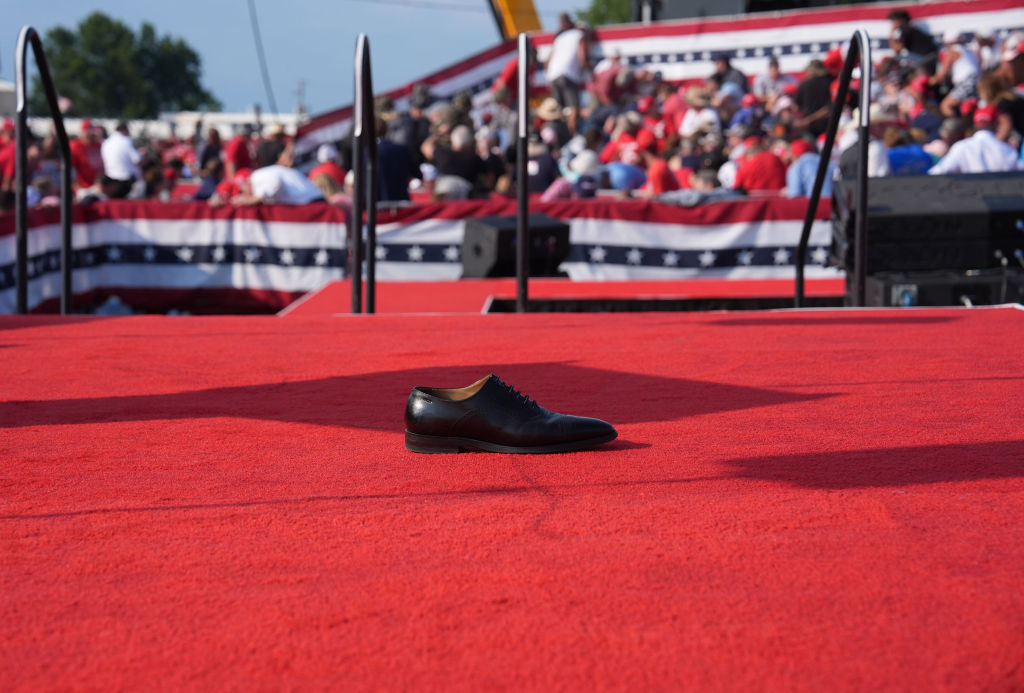
“Perhaps because of the noise people got irritated, and they shot at us. One cousin and one nephew were killed, and my right-hand shoe was hit,’ he says.
Since that family shindig went ballistic, and particularly since his own subsequent climb to power, Tan—commonly understood to have a private army of at least 2,000 men and be a ruthless operator—has been shot at and bombed time and again, with his armored car flipped from IEDs and people around him regularly killed and maimed.
He’s a lucky guy, though. Even a bombing that mangled his car and bodyguards with it left Tan himself with nothing more than a headache and shrapnel in his shoe. His right shoe.
Most of Tan’s political counterparts in the Sulu Archipelago and some of the most contested parts of Mindanao govern largely in absentia due to the danger, so I ask why he stays in the arena.

He leans back in his chair and stretches. “We have already learned to live this kind of life. To us it adds spice. It adds life to life.”
A few years before this chat an intellectually-impaired man was fitted with a backpack-bomb and told to approach Tan at the airport in Zamboanga (the City of Flowers) in Mindanao. “When I was beside him somebody must have switched the radio transmitter so it exploded.” Tan smiles and sweeps his hands down his shirt and trousers as if wiping himself off. “That man was like corned beef,” he says. “Flesh and blood all over me.”
The hapless bomb-carrier, it seems, was facing Tan when someone triggered the remote detonation. If he’d turned so the Governor was directly exposed to the backpack then they both would have been corned beef.
“My companions were hit,” says Tan, “but only my shoe, my right shoe, was hit.”
“Your shoe again?”
“My shoe,” he says, flexing his expensively clad feet.
“What’s with your right shoe?”
He shrugs. “Italian shoes.”
Other politicians I’ve spent time with in the Philippines’ Renaissance south have had family members gunned down, and have ordered the same. I often think of the spidery hands and murmuring tones of an assassin I met—a man who worked in secret for both government forces and insurgent groups, and always had. No one was safe near him, and no one was safe without him near.
To pinch a phrase from Terrence Malick’s The Thin Red Line: the closer to Caesar, the greater the fear.
We live in interesting times.