

























Victoria ScheerBBC News, Yorkshire
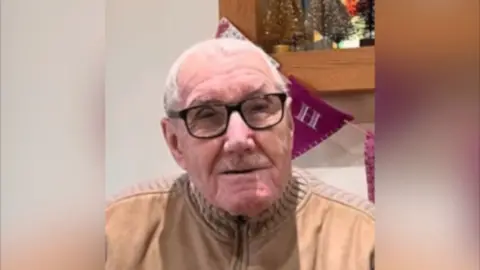 Family handout
A coroner has called for action after a grandfather died when his clothing caught fire on a gas heater due to a build-up of flammable skin cream.
James Rownsley, 89, died at his home in Kempton Gardens, Mexborough, on 20 February.
An inquest at Sheffield Medico-Legal Centre last month concluded the presence of emollient cream on his clothing had been “a significant factor in his death”.
Senior coroner Nicola Mundy has now written to the National Fire Chiefs Council (NFCC), raising concerns about a lack of public awareness around the fire risks associated with emollient creams.
The inquest heard how Mr Rownsley had limited mobility and had been in the habit of lighting his Calor gas fire to warm the sitting room while the central heating heated up his house.
That morning, when he switched the fire on, a flame caught his clothing. He was unable to extinguish the fire in time.
The inquest heard both his clothes and a sofa throw had residue of emollient creams, which were responsible for his clothing catching fire and the intensity of the blaze.
Emollients absorbed in clothing and bedding cannot be removed by washing.
A fire investigator told the coroner that ignition risks of emollient creams appear “not to be fully appreciated” by partners such as medical health professionals.
Mr Rownsley’s family also said that members of the public were unaware of the dangers posed and that they had made their own efforts to educate others.
‘Lack of awareness’
In a report to the National Fire Chiefs Council, Ms Mundy said the fire risk of emollient creams needed to be communicated and better understood by both health professionals and the public.
She said the risk seemed to be “heightened” in situations where elderly people or people on lower incomes were using open flames to heat their homes to reduce the cost of central heating.
The coroner also noted a reporting discrepancy in relation to deaths involving emollient creams in England.
She said while data from fire services report 50 deaths since 2020, the data held by the Medicines and Healthcare products Regulatory Agency only had a record of 15.
The NFCC has until 8 October to respond.
Safety warning
Chris Tyler, group manager of South Yorkshire Fire and Rescue’s community safety team, said previously: “We fully recognise the effectiveness and importance of emollient creams, and we also recognise that they are not flammable on their own.
“However, a build-up of emollient cream residue on fabrics such as bedding, clothing, and dressings can make these already combustible items even more flammable.”
Mr Tyler said anyone using this product should keep away from fire, naked flames or heat sources.