





















Following decades of anticipation, Francis Ford Coppola’s ambitious sci-fi spectacle Megalopolis finally struck the masses on September 27, 2024. A monumental box-office flop, earning $6.2 million against a $120 million budget (via Box Office Mojo), Megalopolis is among the worst-reviewed movies of the year, threatening to sully Coppola’s reputation as one of the finest American filmmakers in history.

Yet, for all the critical misgivings and public detractors, Megalopolis is not as bad as its reputation or poor box-office results suggest. What the film lacks in a compelling and coherent story, it makes up for with dazzling visuals, excellent performances, and weighty cautionary themes about the fall of a republic. Perhaps most telling, Megalopolis reminds artists that risk-taking is necessary to achieve one’s true vision, regardless of commercial success.
What Is Megalopolis About?
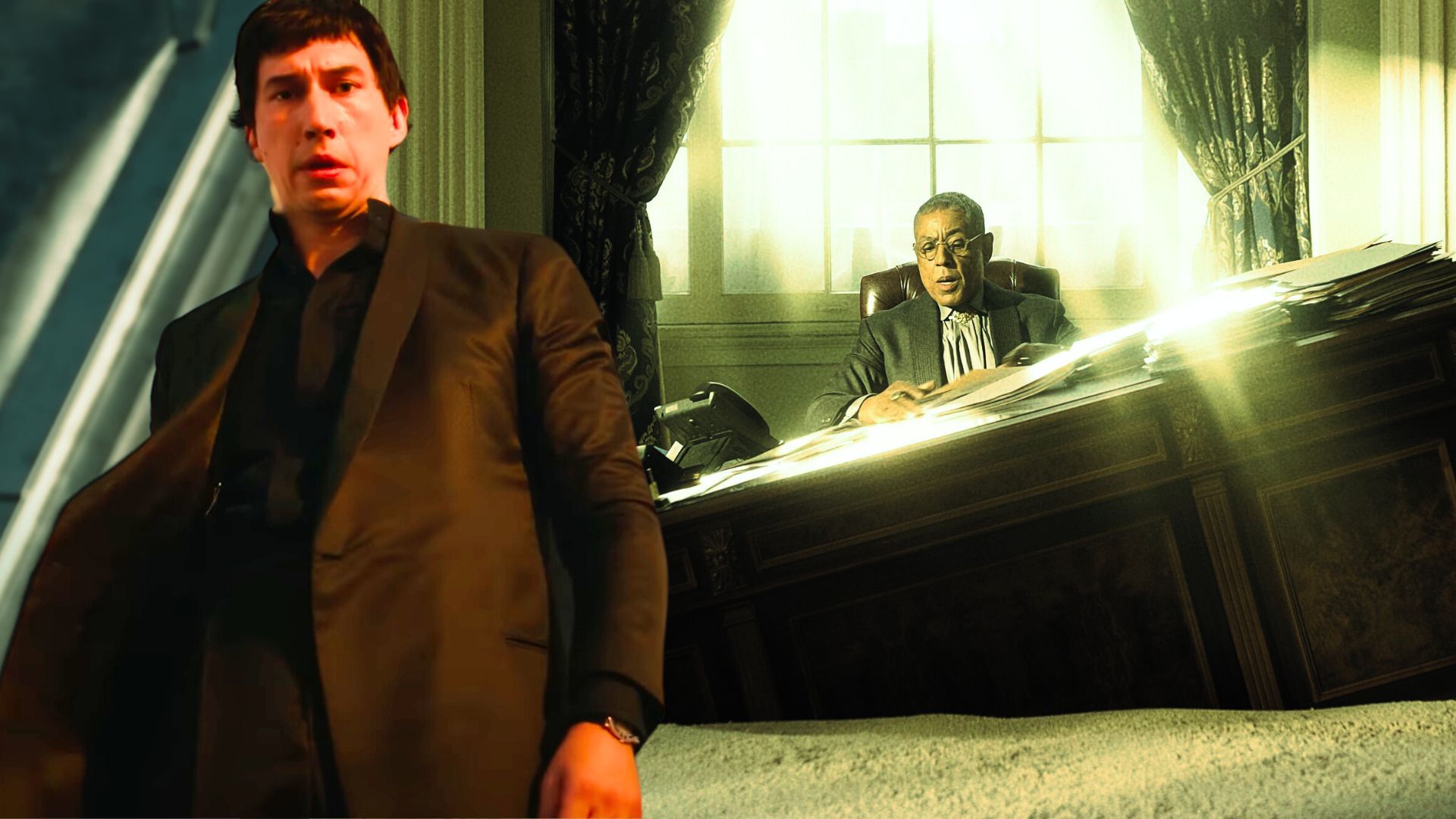
A passion project decades in the making, Francis Ford Coppola personally invested $120 million to make Megalopolis, a sprawling, highly ambitious science fiction tale inspired by the “Catilinarian Conspiracy in 63 BC.” Set in an alternate version of the modern-day U.S., the movie concerns idealistic architect Cesar Catilina (Adam Driver), who wants to reconstruct New Rome as a utopia called Megalopolis. Cesar is met with resistance by Franklyn Cicero (Giancarlo Esposito), a corrupt Mayor intent on retaining power by retaining the status quo and keeping the populous oppressed.
While this basic conflict is easy to follow on paper, the onscreen narrative becomes an incoherent, jumbled mess with a merciless 138-minute runtime. In attempting to push cinematic boundaries forward through technology and editing, the result backfires ingloriously in Coppola’s face, leaving viewers either laughing out loud at the sheer silliness or scratching their heads in utter bewilderment. Sometimes both, often at once. For an all-time venerated filmmaker like Coppola, who gave the world such undeniable classics as The Godfather and Apocalypse Now, fans expected a more compelling and transcendent cinematic experience.
However, to say Megalopolis is merely a victim of lofty expectations is disingenuous. Without judging it against Coppola’s hall-of-fame oeuvre, Megalopolis fails to tell its epic saga with linear clarity, emotional resonance, and a narrative throughline that connects each eye-popping set piece. Instead, the result feels like a series of disparate vignettes vaguely tied together with nearly invisible connective tissue. But if a story is all an audience craves, reading a book will suffice. Megalopolis aims to give viewers not just a story but a unique artistic cinematic experience that challenges the form.
The Polarizing Response to Megalopolis
Commercially speaking, Megalopolis took an absolute beating at the international box office. The film grossed a paltry $6.2 million worldwide against a $120 million budget from Coppola’s pocket. The financial figures render Megalopolis one of the biggest bombs of 2024 and beyond. Considering how badly it performed theatrically, one might expect a similar critical response. Alas, proving how divisive the movie remains, Megalopolis boasts a middling 55 Metascore, 5.1 IMDb rating, 47% Rotten Tomatoes Rating, and a 49% PostTrak score.
With roughly a 50% approval rating across multiple score aggregators, Megalopolis is not as bad as the most vocal detractors claim. Professional critics and general moviegoers are divided down the middle, with many on both sides defending and skewering the film in almost equal measure. Positive reviews from IndieWire, The Telegraph, Rolling Stone, The L.A. Times, The AV Club, and The Hollywood Reporter are countered by negative marks from Variety, The Guardian, Screen Daily, Collider, and others, stirring passionate debate about the merits of the movie’s ambition versus its execution.
Past the critical circles, the response to Megalopolis on Letterboxd further supports how the movie is better than advertised. While the punny refrain “Mega-Flopolis” can’t be ignored, several supporters make decent points about why the movie works for them. With over 1,700 likes, the most articulate defender of the film is James Schaffrillas, who states:
“Was dazzled and bewildered in equal measure by this. I’m not one of those squares who needs a coherent plot or a sensible magic system in order to get into a film like this; I was absolutely captivated by multiple sequences, in fact. However, I couldn’t help but feel a bit let down by the lack of meaningful character progression in this. It feels like Cesar never changes over the entire film’s runtime no matter what he goes through, and this is a major contributing factor to the film’s conclusion feeling so hollow and unearned.”
For those who can get past the campy and cartoonish characters, the lack of narrative cogency, and the unsatisfying ending, Megalopolis has several redeeming qualities that discredit the claim it’s the worst movie made in decades.
The Redeeming Values of Megalopolis, Explained
Despite the incoherent story that is impossible to follow, at times, Megalopolis is still a unique cinematic experience to behold. Even those who panned the controversial Coppola film note the excellent performances by Adam Driver and Aubrey Plaza. As The Telegraph review notes:
“Aubrey Plaza is fantastic in this full-body sensory bath movie which follows a struggle for power among the elites of New Rome.”
Plaza plays a character named Wow Platinum, a carnal seductress who falls for Cesar, then his wealthy uncle Crassus (Jon Voight), and finally, Cesar’s cousin Clodio (Shia LaBeouf). As The L.A. Times review notes:
“Once you let go of the understandable dream of Coppola returning with another masterpiece, there is much to enjoy in ‘Megalopolis,’ especially its cast members, leaning into their moments with an abandon that was probably a job requirement.”
Beyond Plaza’s magnetic performance and Driver giving another dedicated turn, the movie’s dazzling digital photography and never-before-seen special effects remain its strongest qualities. Even those likening the film to a confounding Southland Tales debacle recognize the transcendent visual splendor Coppola achieves with cinematographer Mihai Malaimare Jr. and Special Effects Supervisor John S. Baker. As Sethsreviews notes on Letterboxd:
“[Megalopolis is] A deeply earnest climax of Francis’ career that extends his late-stage work and echoes some of his prior visually maximalist endeavors. One man’s attempt to create paradise in the midst of a rapidly failing society. I doubt we’ll see better imagery for a while; it’s a golden visual feast, with some extremely impressive moments, particularly in the final third.”
While Megalopolis is nowhere near perfect and suffers from a confusingly incoherent story, the sci-fi box-office bomb is not entirely irredeemable. The notion that it’s the worst movie made in decades and will undo Coppola’s revered reputation is grossly overstated. At the bare minimum, Megalopolis may be a failure, but at least it’s a fascinating failure that takes a big, ambitious swing to break through the current cinematic ceiling. Megalopolis is currently playing in select cinemas.