



















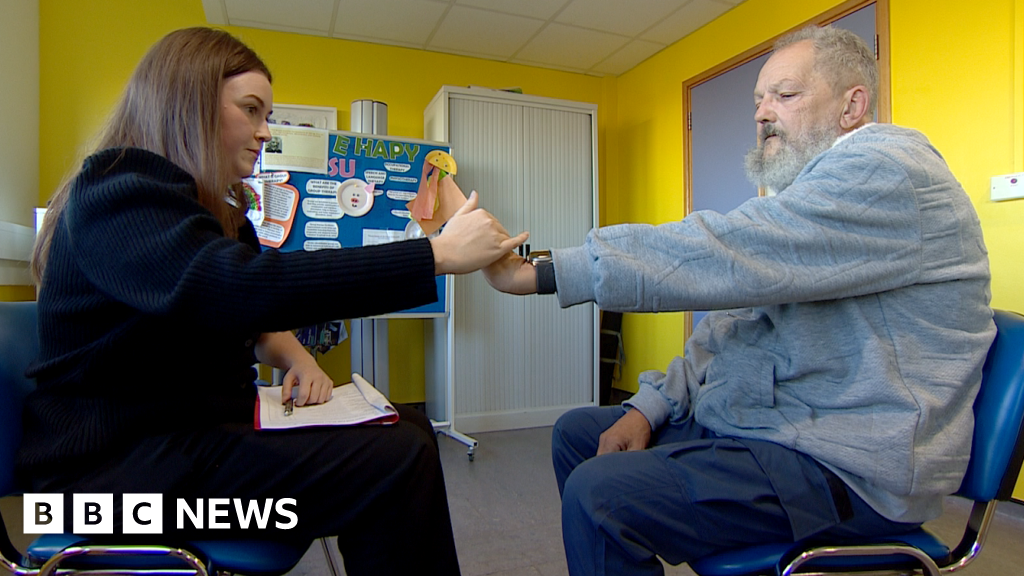

The trial at King College Hospital is part of a wider project being run by Sheffield Teaching Hospitals and the University of Sheffield.
Here in London, it’s led by consultant occupational therapist Bill Tahtis. He tells me that initial studies have shown that when people receive stimulation from the device, it can speed up the rehabilitation process.
He says: “We think this is something on top of the therapy we provide that will be really beneficial to patients.”
At the moment, Bill and his team are trying to recruit more people to the study, seeking patients who have had a stroke between six months and 10 years ago.
He says: “We don’t know whether the treatment will be effective using this mechanism and we don’t know which specific subgroups it will work for.”
He adds: “It’s exciting, we feel it’s got great promise but we’re testing to see if it does.”
For Michael, it’s good news.
After an hour or so of testing, he’s been accepted on to the trial and given a lot of exercises to do every day when he gets home, using the new device.
He laughs as he leaves. “I don’t know what I passed… But I passed something!”