




















With his award-winning performance in Yellowstone and supporting roles in films such as Man of Steel, Kevin Costner appears to be experiencing something of a career renaissance. The entertainment industry can sometimes be fickle, especially regarding box-office disappointments that arrive on the heels of critical and commercial successes. Through the 1990s, Costner was one of the biggest stars in Hollywood and one who also achieved notable success as a director, receiving two Academy Awards for Dances with Wolves. Despite the rising star power that Costner had generated early on in his career, two major disappointments, Waterworld and The Postman, saw it plummet almost as quickly.
In theory, Waterworld appeared like it could have been a huge success. One of many summer blockbusters that cater to the desire for action on a large scale and is set in a dystopian future where the fears of climate change have become manifest, with the earth now completely underwater due to the melting of the polar ice caps. Waterworld could have been the heir apparent to the Mad Max films. Released just two decades after Steven Spielberg had utilized the ocean to usher in the age of the summer blockbuster with Jaws, and with a supporting cast that included veteran Dennis Hopper, Costner’s star power was completely overshadowed by a vehicle that was overwrought with expensive sets and a comical plot that even fans of B-grade sci-fi and action cinema found difficult to stomach.
A Dystopian and Aquatic Future
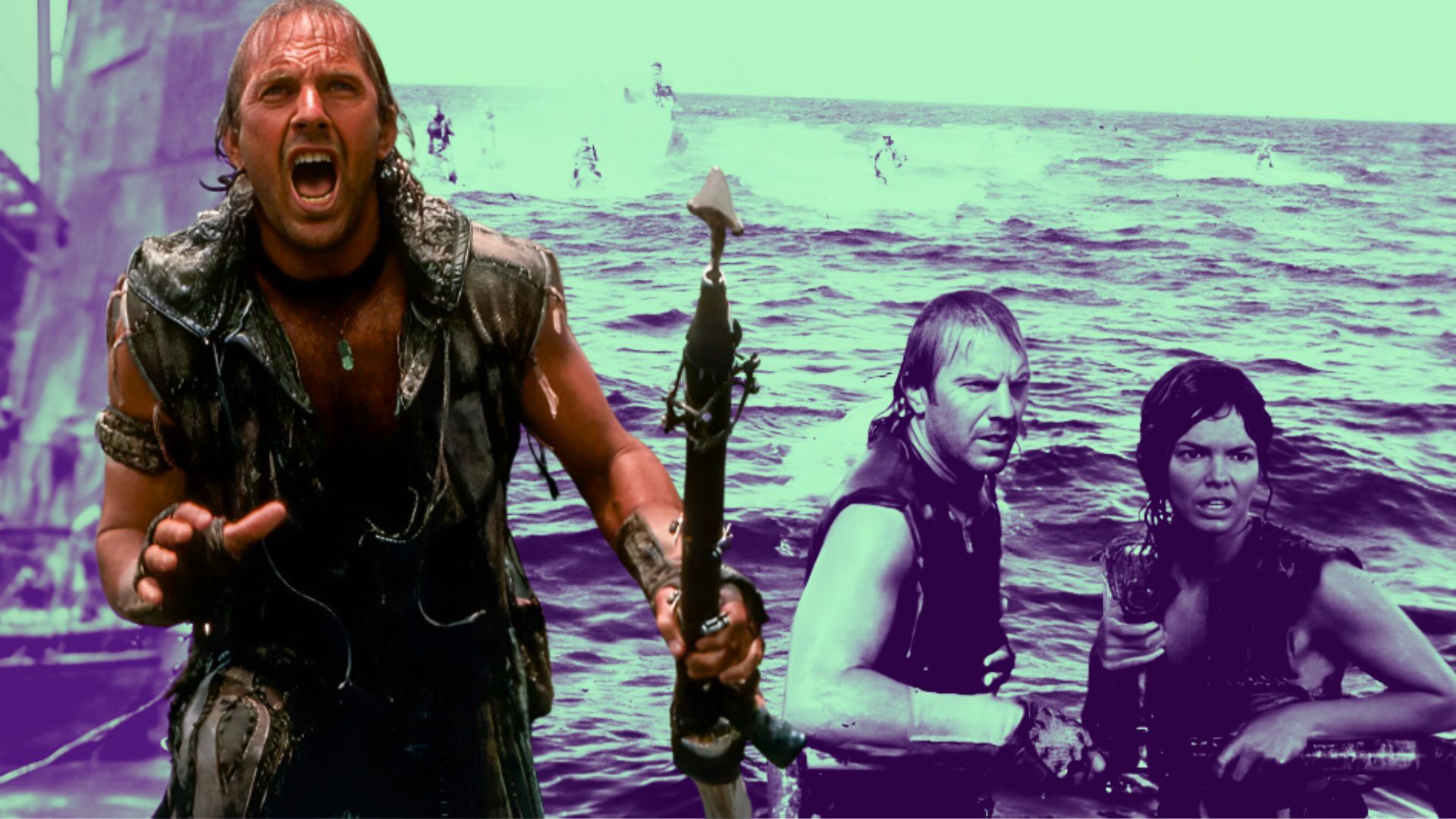
The first observation that many have made about Waterworld is that it borrows a considerable amount of its content from the Mad Max films, almost to a fault. Waterworld takes place in a dystopian future, one where outsiders, nomads, and outlaws rule the open water. This is a fair and justified assessment, considering the Mariner (Kevin Costner) is somewhat comparable to Mad Max and the rogues’ gallery of villains who he goes up against. Alongside The Deacon (Dennis Hopper), he patrols the waves in ramshackle vehicles that appear as if they were assembled from the discarded remains of a long-lost civilized world.
Credit has to be served where it’s due, and while the comparisons to George Miller’s films are virtually impossible to overlook, the setting and location are far removed from the endless amount of B-grade cash-ins that existed before Waterworld, such as The Bronx Warriors, Endgame, and Rats: Night of Horror. What sets Waterworld apart from so many others is the amount of detail and design that went into forming a world where dry land is nonexistent.
Much like Michael Cimino’s 1980 western Heaven’s Gate, Waterworld went notoriously over budget, which certainly prevented the film from recouping much of its budget but allowed for a wealth of designs and sets that are nonetheless impressive. With so much of the film being shot on the open water, it’s impossible not to get swept into the manufactured reality that Waterworld exists in.
Much has been made about the excessive budget and cost that went into production, which hampers many objective opinions that are far more influenced by the behind-the-scenes aspects of Waterworld than the film itself. Waterworld is an ambitious project and one where the amount that went into the film can certainly be seen and needs to be experienced first-hand.

Related
The 10 Best Dystopian Action Movies of All Time
From space adventures to viral outbreaks, these are the best dystopian action films ever made.
Overshadowed by a Setting and Co-Star

With the setting and grandiose action sequences that are present throughout Waterworld, there’s very little attention to aspects such as character development or crafting a memorable narrative. In all fairness, these are aspects that many fans of action cinema don’t particularly place a great deal of emphasis on. After all, two hours of non-stop action and adventure don’t always require cohesive narratives and multidimensional characters to provide the entertainment that their audiences seek.
One of the attributes that helped launch Costner’s career is his ability to be an on-screen hero, but also one that could carry out a performance that connected with the motion picture audience on a deeply personal level. In Robin Hood: Prince of Thieves, he was able to carry his performance while injecting a fair amount of humanity into the role. The same observation can be made about Dances with Wolves and JFK, where Costner’s strengths are fully displayed. Waterworld has much more emphasis on action and adventure, and Costner’s role is serviceable, but many of his strengths are underutilized in a film where they’re not needed.
While the dystopian setting and explosive action of Waterworld might have overshadowed some of the attributes that make Costner a notable actor, there’s no denying that Dennis Hopper’s performance as The Deacon is easily the most memorable aspect of the film. The late Dennis Hopper’s career was full of performances that ranged from bombastic to unhinged; in films like Blue Velvet, Apocalypse Now, and Easy Rider, among others, he could channel charisma and an unhinged persona that allowed him to steal the show, for the lack of a better term. A film like Waterworld, with its outlandish dystopian setting and charismatic villains, is the perfect vehicle for Hopper to shine.

Related
7 Disastrous Details About the Catastrophic Production of Waterworld
Waterworld’s production story is one where it feels like everything that could have gone wrong certainly did (and then some.)
An Unmitigated Disaster or Overlooked Gem?

One critic described Michael Cimino’s Heaven’s Gate as an unmitigated disaster. Waterworld, despite the negative reputation and jokes that have been made at its expense, might not be Kevin Costner’s most memorable moment in his career, but it’s certainly one of its most ambitious. When it comes to describing Waterworld, it’s easy to be cynical and dismiss it as a project that ran over budget and took the ideas from the Mad Max series and put them in the ocean.
The fact that it’s still a topic of discussion almost three decades after its theatrical run illustrates the impact that Waterworld made on popular culture. Perhaps in a different world, in a different time, Waterworld would receive acclaim as an ambitious blockbuster that dared to take familiar ideas and place them in a location where they had never been before. Say what you will about the film as a whole, but it’s impossible not to be entertained by it.