






















Based on the memoir by newly appointed U.S. Vice Presidential candidate J.D. Vance, Hillbilly Elegy remains one of the biggest movie misfires in the past five years. Directed by Ron Howard under the veneer of a prestigious awards darling, the star-studded backwoods drama fell flat among critics and moviegoers alike. Although the film did score two Oscar nods, including Best Actress in a Leading Role for Glenn Close, it walked away empty-handed and was almost immediately forgotten.
Now that Vance has been nominated to run alongside Donald Trump in the 2024 U.S. Presidential election, he and Hillbilly Elegy are becoming under more scrutiny as his popularity rises. Now that the film is available to stream on Netflix, a closer look at how the wildly misguided and tone-deaf Hillbilly Elegy has only become more problematic is in store. It’s one thing to dangle Oscar bait before the Academy, it’s quite another to capitalize on political favors.
Who is J.D. Vance?

Born in Ohio in 1984, J.D. Vance is a former U.S. Marine and current junior U.S. Senator representing his home state. Following his four-year stint in the Marines, Vance graduated from Ohio State University in 2009 and Yale Law School in 2013. In 2016, Vance’s memoir Hilbilly Elegy was published, recounting his days living in rural Ohio and the culture clash he faced upon joining the Ivy Leagues. In 2020, Hillbilly Elegy was adapted into a star-studded motion picture by acclaimed director Ron Howard.
Despite having bad things to say about Donald Trump throughout his tenure in Washington D.C., Vance was picked as Trump’s Republican Vice Presidential running mate in July 2024. Since the announcement, Hillbilly Elegy has surged in popularity on Netflix and Amazon, exposing Vance’s upbringing and brand of conservative politics. The movie was touted as an awards-contending prestige picture but was roundly rejected by critics and general moviegoers. Although it’s now gaining more attraction in the public sphere, the movie remains problematic for all involved.
What Is Hillbilly Elegy About?

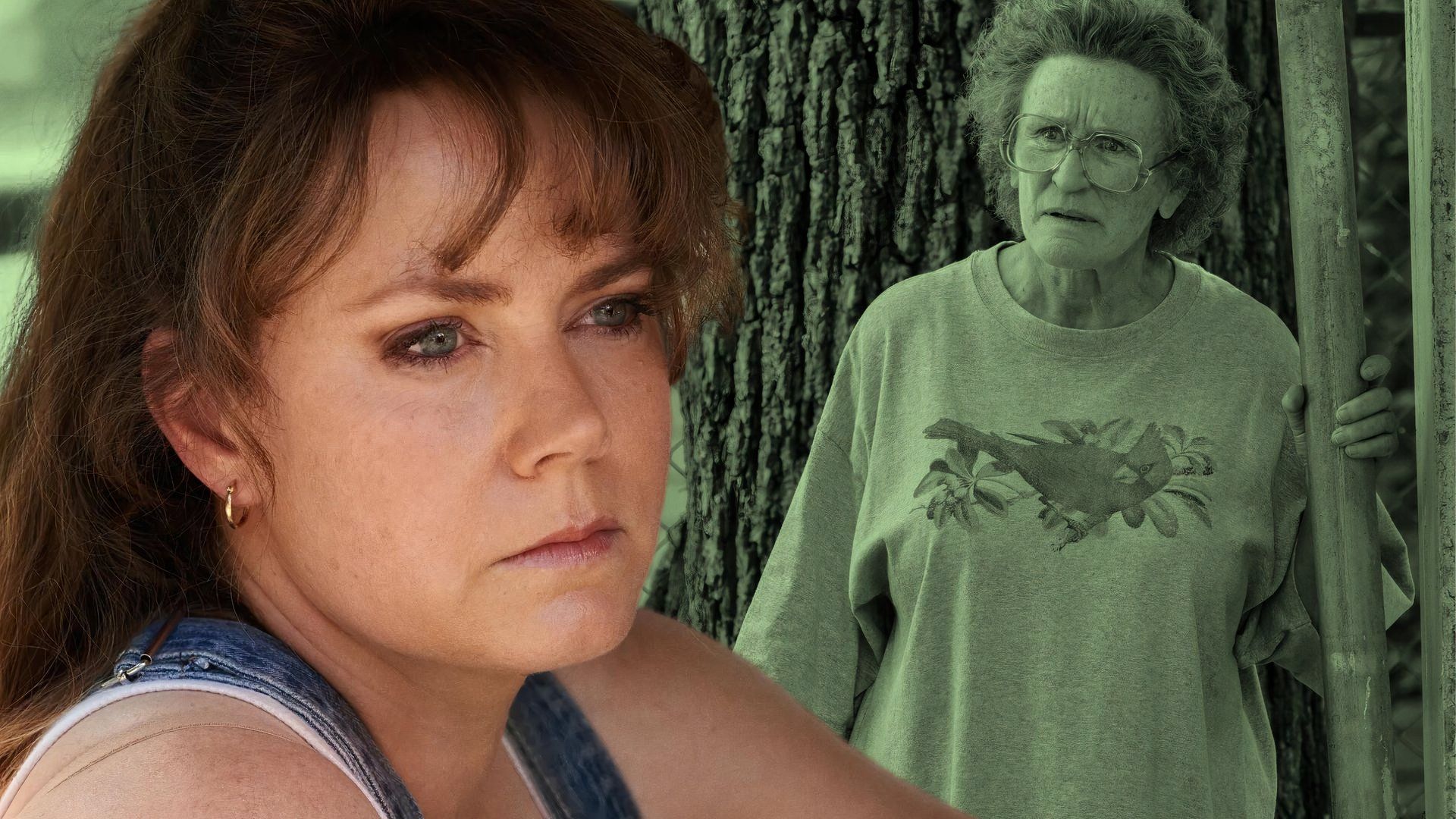
Set in Middletown, Ohio in 1997, Hillbilly Elegy is a domestic drama exploring class and cultural issues in the Appalachians. The story is told through the eyes of J.D. Vance (Tierney Smith young, Gabriel Basso old) and explores his coming of age and growing up with his drug-addled mother, Beverly (Amy Adams), and his Kentuckian grandparents, Mamaw (Close) and Papaw (Bo Hopkins). Along with his older sister Lindsay (Haley Bennett), J.D. grapples with the family values and the ever-changing social mores of the Midwest.
Portraying himself as a victim of circumstance who rises above his family’s tumultuous changes, J.D. ponders the generational differences between his grandparents, mother, his sister, and self. When J.D. heads down the same self-destructive path as his mother, he is taken in by Mamaw and given strict life lessons that eventually lead to his enlistment in the U.S. Marines.

Related
Best Ron Howard Movies of Every Decade
With many box office hits and an Academy Award for Best Director on his mantle, Howard is certainly not a filmmaker whose success can be put in doubt.
The film jumps 25 years ahead to depict the evolution of the Vance family and how J.D. lost touch with their values upon attending Yale Law School. Vance meets and marries a lawyer named Usha (Freida Pinto), and eventually returns to Ohio to be near his mother and sister, with Bev remaining sober for six years.
A Failed Attempt at Oscar Glory

Despite the Oscar-caliber pedigree among the cast and crew, Hillbilly Elegy was obliterated by critics upon release in 2020. The consensus suggests that too much Hollywood grandstanding and desperate Oscar bait was more of an embarrassment than a truly merited achievement. The film currently boasts a paltry 25% Rotten Tomatoes rating and a lowly 38 Metascore, with most of the criticism aimed at Vance’s lack of emotionally resonant storytelling and unconvincing self-aggrandizement.
According to the critical consensus on Rotten Tomatoes:
“With the form of an awards-season hopeful but the soul of a bland melodrama, Hillbilly Elegy strands some very fine actors in the not-so-deep South.”
The most common critical refrain about Hillbilly Elegy relates to the showy, Oscar-dangling performances and directorial acumen of multiple nominee Ron Howard, none of which live up to its high-profile billing. According to Rolling Stone’s Peter Travers:
“With greater emphasis on simplicity instead of Hollywood showboating,
Hillbilly Elegy
might have been more than a missed opportunity.”
Echoing the sentiment, Variety’s Owen Glieberman stated:
“As long as Close is acting up an award-worthy storm (her performance is actually quite meticulous),
Hillbilly Elegy
is never less than alive. Amy Adams does some showpiece acting of her own, but as skillful as her performance is, she never gets us to look at Bev with pity and terror.”
More bracing yet, IndieWire’s David Ehrlich criticized Vance’s storytelling, declaring:
“The process of watching him cut his losses and recommit to his own success is rendered in a way that it isn’t just dramatically unsatisfying in the extreme, but also on the verge of sociopathic.”

Related
Hillbilly Elegy Earns Glenn Close Oscar and Razzie Nominations for the Same Role
Glenn Close is up for Best Supporting Actress at the Oscars and Worst Supporting Actress at the Razzies for her role as Mamaw in Hillbilly Elegy.
More vocal criticism addressed the forgettable Oscar bait movie‘s portrayal of Vance’s view of poor Southerners, with the A.V. Club labeling the movie as “Bootstrapping poverty porn” and reinforcing “the stereotypes it’s meant to be illuminating.” The title of the A.V. Club’s review asked for the end of the war on the poor perpetuated under the Trump administration, stating “May Hillbilly Elegy Mark the End of Trump-Era Myth-making about the White Working Class.”
The last word goes to The Wrap’s Alonso Duralde, who wrote:
“Hillbilly Elegy isn’t interested in the systems that create poverty and addiction and ignorance; it just wants to pretend that one straight white guy’s ability to rise above his surroundings means that there’s no excuse for everyone else not to have done so as well.”
Vance’s Vice-Presidential Nomination Promises More of the Same

With J.D. Vance’s recent nomination to be Donald Trump’s Vice Presidential running mate in the 2024 election, “The Trump-era myth-making about the white working class” is not going to end anytime soon. On the contrary, now that Vance has been thrust into the international spotlight, he will almost certainly continue to advocate for the same policies espoused in Hillbilly Elegy and the advocacy will be amplified dramatically.
Yet, just as disingenuous as the Amy Adams movie was rejected for, Vance is already backtracking on the beliefs he put on the public record in his memoir and elsewhere. Despite accepting Trump’s nomination to run for Vice President, Vance has insulted Trump in the past. According to Reuters, Trump once compared Trump to Adolf Hitler in private. Publicly, Vance has called Trump “reprehensible” and “an idiot.”
In 2016, Vance said “Trump is unfit for the nation’s highest office” (via The Guardian). Vance also called Trump “cultural heroin” and famously described himself as a “Never-Trump guy” (via Rolling Stone and The New Yorker). Perhaps most scathing, Vance told The Guardian that, “Trump is noxious and is leading the white working class to a very dark place.”
Despite the countless criticisms of the 45th President, Vance happily accepted Trump’s nod to become the 2024 Vice Presidential candidate for the Republican Party. When asked about what changed since 2016, Vance simply said he was wrong about Donald Trump. The reality is that Vance was handpicked by Trump to advance his neo-conservative agenda relative to women’s productive rights, anti-immigration, healthcare, the wars in Ukraine and Gaza, and other regressive policies aiming to undo political norms and set America back decades.
Hillbilly Elegy is available now on Netflix.