





















Summary
- Contractual obligations forced Bruce Willis to star in Armageddon and The Sixth Sense, leading to success despite a rocky start.
- Willis’ career was saved by accepting reduced pay for Armageddon, leading to critical acclaim and commercial success.
- Like Willis, other actors such as Val Kilmer and Marlon Brando also found themselves obligated to take on roles that they didn’t initially want.
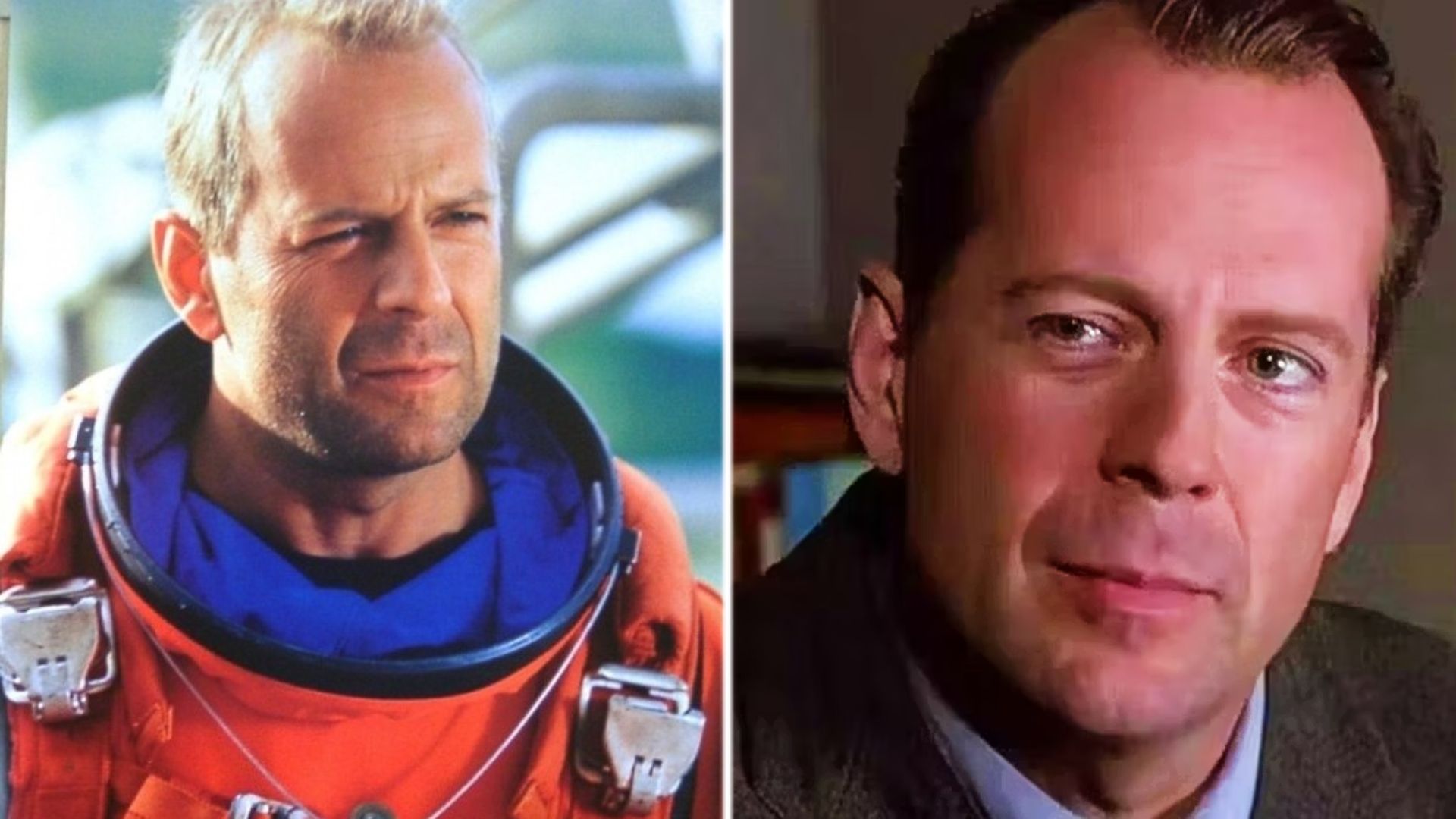
In the late 1990s, Bruce Willis starred in two of his most successful and critically acclaimed roles. Armageddon alone became the highest grossing film in its year of release, 1998, and The Sixth Sense placed second in 1999, right after The Phantom Menace. His eventual involvement in both films proved extremely successful for Willis. However, it turns out he was actually contractually forced to star in his two biggest movies.
Bruce Willis found himself in this situation after his actions directly forced Disney to shut down production on a project which Willis was producing and set to star in. This event may have some similarities to one Joaquin Phoenix has found himself in. Recently, Phoenix abruptly pulled out from a recent romance film after getting “cold feet.” Whilst currently nothing has come out of it, there remains speculation over potential legal action reflective of Willis’s story.
Willis’ experience was not as uncommon as it seems, as several other actors came to take part in their more well-known projects out of obligation. This offers film fans a small insight into the backstage drama that can sometimes alter film history for the better.
Broadway Brawler Falls Apart and Disney Threatens Legal Action
Achieving fame with his leading role as David Addison in the comedy series Moonlighting, Willis’s career took off from there. In 1988, he took the lead role in the Die Hard films, gaining greater recognition with roles in major films of the 1990s. Issues began to arise as the ’90s came to an end, with one project threatening his future career. Planned for release in 1997, Willis began producing and acting in the unfinished romantic comedy, Broadway Brawler.
Related
Movies with the Most Infamous Legal Battles and Lawsuits
These eight films had some notoriously famous lawsuits that captured headlines and changed movie productions.
Only 20 days into shooting, the atmosphere among the crew appeared quite dire. Willis was reportedly unhappy with the work produced by a proportion of the crew, ultimately firing multiple people. The list of jobs axed includes the cinematographer, wardrobe designer, director, and Willis’s co-producer.
By this point, over half of the film’s budget of $20 million was spent. Attempting damage control, Willis hired a replacement director. However, Disney shut down the film’s production before any additional scenes could be shot.
The breakdown of Broadway Brawler was attributed to the actions of Willis, placing him in a tough spot with Disney. Coming out of this, Willis was presented with a $17.5 million lawsuit from The Walt Disney Company, as well as a strong case against him.
Armageddon to the Rescue
With a loss facing the William Morris Agency, who represented Willis, they attempted to negotiate Willis out of the mess. They eventually came out of the ordeal with a decent deal which Willis was clever enough to accept. He would be contractually bound to star in three upcoming films with Disney at a heavily reduced salary. At the time, it may not have looked like the greatest deal, but in hindsight, it paid off massively.
Armageddon was the first of these three films. $3 million was the price Willis was paid for his involvement, a whopping $17 million below his standard asking price. This loss was largely justified by Disney to help make amends for the money lost when Broadway Brawler imploded on itself. The film itself had quite a mixed response, receiving quite a collection of award nominations and some wins, mainly for its soundtrack.
At the same time, Willis won a Golden Raspberry for his leading role. Despite this, it was undeniably a commercial success, becoming the highest-grossing film of 1998.

Related
10 Actors Who Later Revealed They Were Underpaid for Their Work
Salary negotiations are part of the job for actors, and, for various reasons, many often walk away underpaid for their work.
The next role Willis was obligated to accept was that of child psychologist, Malcom Crowe in M. Night Shyamalan’s The Sixth Sense. The Sixth Sense was one of the biggest films to come out of the 1990s, receiving great critical acclaim. Less successful, however, was the 2000 film, The Kid. Making a modest amount at the box office, The Kid was the third film in a row which helped to secure Willis’s career after such a dramatic, and almost career crushing, event.
Other Actors Who Were Forced Into Their Roles
It turns out that this is not particularly uncommon. Several other actors found themselves in a position like Willis, taking a role out of obligation rather than choice. Famously, Val Kilmer did not originally want to take part in the 1986 classic, Top Gun, revealing in his documentary, Val, that the script was “silly.”
Kilmer, fresh out of Juilliard, was not keen on acting in action films. However, as per his contract with Paramount, he was forced to audition for the role, which he got despite attempts to throw the audition.

Related
This Oscar-Winning Epic Almost Didn’t Happen Thanks to the Opinion of Two Hollywood Giants
This is one occasion were two of the biggest directors in Hollywood were very wrong.
Closer to Willis’s case was Marlon Brando’s, whose recognizable role as Napoleon Bonaparte in the 1954 film, Desirée, was not accepted by choice. Shortly before shooting began for The Egyptian, Brando pulled out, claiming his co-star, Bella Darvi, was not up to par, and therefore did not want to be a part of the project anymore. Fox was not happy with this outcome, bringing action against Brando for worsening the situation by causing further delays.
As with Willis, Brando accepted the compromise to play the infamous French dictator. All was not smooth sailing, as Brando tended to act unprofessional on-set out of protest, which caused Paramount to have some doubts about his casting in The Godfather.